 Not to camp
The suitcase
Stays in the vehicle
- Holds
- The rest of your trip
- Where
- Locked in the van
- Access
- Morning and evening
Guides
Language
EnglishCurrency
US dollar · $GetYourGuide shows prices in the currency you choose.
Guide · Packing list
What to pack for a Sahara desert tour comes down to one rule: a small backpack for the dunes, and clothes for a hot day and a cold night. Here is the full list, season by season.
Editorial team, marrakech-to-merzouga.comUpdated October 24, 20266 min read2 sources
Quick answer
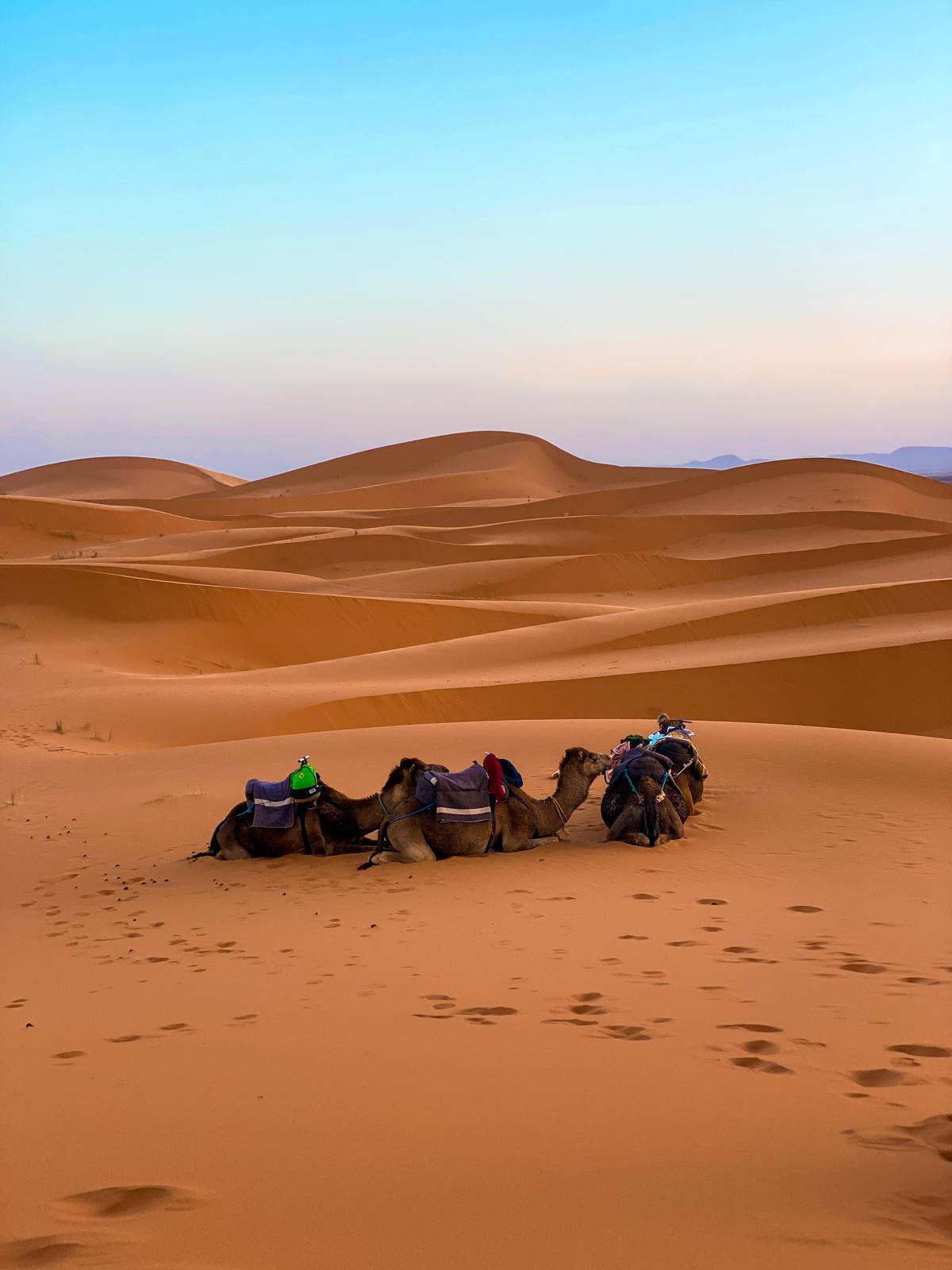
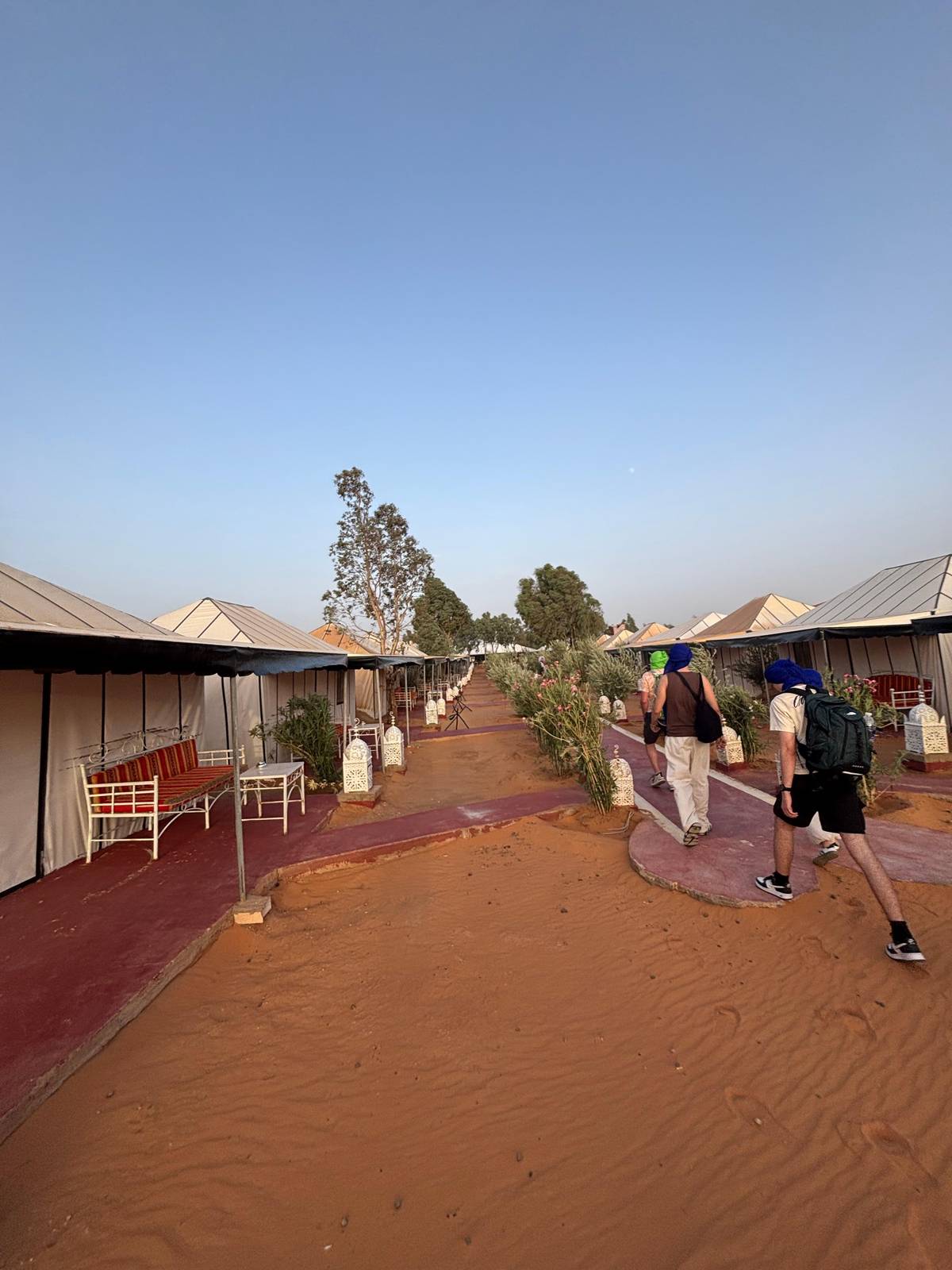
The single most useful packing decision is to split your things before you leave Marrakech. On the tour this site recommends, large suitcases stay securely in the vehicle during the tour, and you must pack a small backpack for the night in the desert, because camels cannot carry large luggage. Other tours say the same: your luggage stays in the van while you camp, and you bring a small backpack for the camel ride and the night.
The suitcase or big rucksack holds everything for the rest of your trip, and the small backpack holds only what you need between the edge of the dunes on one afternoon and the vehicle the next morning. Pack the small bag the night before you reach the desert, in the hotel on the road, so you are not digging through the van at sunset.
Keep the small bag small. You will carry it on your back on the camel, up a dune at sunrise and into a tent with little floor space. A day pack of the kind you would take on a city walk is right; a large hiking pack is too much.
When to pack what
Evening before
Pickup details arrive by WhatsApp between 5:00 PM and 6:00 PM.
Morning of day 1
Cash for lunch, a passport or ID card in your bag.
Hotel night
Move the night's things into the small backpack.
At the dunes
Large luggage stays in the vehicle.
Sunrise
Winter nights fall to 0 to 5 °C.
Start with warmth. A jacket is on the listing's own bring list, and from November to February the operator puts desert nights at 0 °C to 5 °C. Another tour asks guests to bring warm sleeping clothes in winter as temperatures can drop to 0 °C, even with the blankets provided. A fleece or down jacket, a hat and a pair of warm socks take little room and change the night.
Then the basics for one night: a toothbrush and paste, a small towel, wet wipes, which one tour specifically recommends, a torch or headlamp for the path to the washrooms, any medicines you take, and a power bank for your phone. Add a bottle of water; one trip from Fes recommends bringing bottles of water for the overnight stay.
Finish with the things for the morning: sunglasses, a hat and sunscreen for the ride back, and your camera, which the listing names on its bring list. A light scarf protects your face from sun and blown sand on the camel and doubles as a layer at night.
Month by month
Item by item
| Item | Why | Source |
|---|---|---|
| Small backpack | Camels cannot carry big luggage | Our pick |
| Jacket | Winter nights 0 to 5 °C | Our pick |
| Warm sleepwear | Nights can reach 0 °C | Another round trip |
| Closed-toe shoes | On the bring list | Our pick |
| Long trousers | For the camel ride | Safari with food |
| Wet wipes | Recommended for camp | Another round trip |
| Cash | No ATMs in the desert | Our pick |
| Water bottles | For the overnight stay | 2-day trip from Fes |
Each line as the GetYourGuide listing named in the last column states it.
Three bags
Decision helper
Add to the basic list by season
Errachidia's average lows are 3.5 and 2 °C.1
Average highs reach 39.5 and 38.2 °C at Errachidia.1
Dusty southerly winds are especially common in spring.2
Vegetarian, vegan and gluten-free meals are available on our pick.
On our pick luxury tents are heated from November to February.
Although they occur at various times of the year, they are especially common during the spring.
Wear loose, breathable clothing that covers your skin. Breathable clothing is on the listing's bring list, and long trousers are recommended for the camel ride on more than one tour. One tour suggests jeans, trousers or long shorts for the trek in the Erg Chebbi dunes. Long sleeves protect from the sun better than sunscreen alone.
For your feet, the listing asks for comfortable shoes and closed-toe shoes. Closed shoes keep hot sand out in the afternoon and cold sand out at sunrise, and they grip on the earth steps of Ait Ben Haddou on day 1. Sandals are fine in the camp, but not for the climb up a dune.
Respect local dress in the villages and towns you pass. Covering shoulders and knees is a good habit throughout southern Morocco, and it suits the desert anyway, where the sun is strong. A wide-brimmed hat and a scarf finish what to wear in the Sahara desert, for sun by day and warmth by night.
Checklist
Cost calculator
Enter your group size to compare four desert tours from Marrakech.
Total from$274
pp from $137
Check availabilityfree cancellationThe sum multiplies each trip's GetYourGuide from-price by the size of your party and converts it at the day's ECB rate; checkout shows the final figure.
Video
The video starts loading once you tap play.
In winter, pack for the night first. At Errachidia, the climate station nearest the dunes, the average low is 2 °C in January and 3.5 °C in December, and the operator of the tour we recommend gives 0 °C to 5 °C for its desert nights from November to February.1 Bring a down or warm fleece jacket, a hat, gloves and warm sleepwear, and choose a heated tent if your budget allows.
In summer, pack for the day. Errachidia averages a daily high of 39.5 °C in July and 38.2 °C in August.1 Light long sleeves, a hat with a brim, sunglasses, high-factor sunscreen and a refillable bottle matter more than any jacket, though a thin layer is still welcome at sunrise.
In spring and autumn, pack for both. Average highs at Errachidia are 26.1 °C in April and 26.8 °C in October, with lows of 13 °C and 14.2 °C.1 Spring adds dust: hot southerly winds that carry dust are especially common in that season, and a scarf and sunglasses earn their place.2
Bring cash. The tour we recommend asks guests to bring cash in euro or dirham for lunches, drinks and tips, as there are no ATMs in the desert. Lunch and drinks are not included in its price, and neither are tips. Keep smaller notes for tips and drinks at the camp.
Bring a working phone. A mobile number with WhatsApp is required for coordination on the tour we recommend, and the pickup time and place reach you by WhatsApp and GetYourGuide chat the evening before, between 5:00 PM and 6:00 PM. A power bank keeps the phone alive through two long driving days and a night without many sockets.
Bring identification. The listing asks for a passport or ID card, and accepts a copy. A photo of your passport on your phone and a paper copy in the small backpack cover most needs, with the original locked away in your suitcase or at your riad, depending on what your accommodation advises.
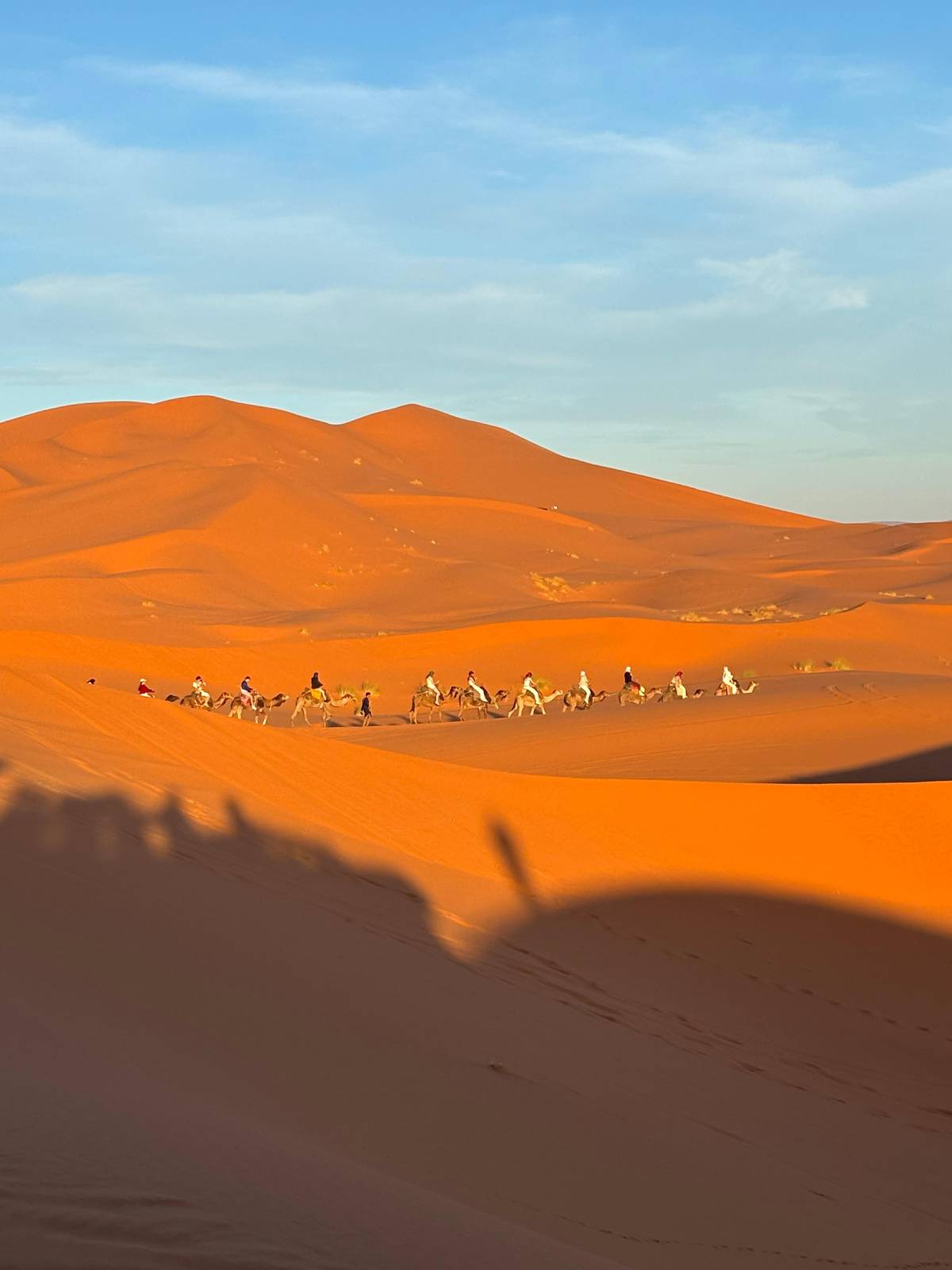
A camera is on the listing's own bring list, and the desert gives you reasons to use it: the kasbah of Ait Ben Haddou, the gorges, the dunes at sunset and the caravan's shadow at sunrise. Sand is the enemy of every lens and charging port, so plan how you will protect your gear before you reach the dunes.
Keep the phone or camera in a zipped pocket or a small pouch inside your backpack when you are not shooting, and change lenses only inside the tent or the vehicle, never on a windy dune. A few zip-lock bags weigh nothing and keep sand out of a power bank, a spare battery and your earphones. A soft brush or a lens cloth clears the dust that will find its way in anyway.
Charge everything on the hotel night before the desert. Our recommended tour lists onboard Wi-Fi in the vehicle, but sockets at a desert camp are not something to count on, and cold winter nights drain batteries faster. Sleep with a spare battery or the power bank inside your sleeping layer to keep it warm for the sunrise.
Leave the big suitcase in the vehicle and the valuables you do not need at your riad in Marrakech, if it offers safe storage. You will not need a laptop, jewellery or more than one change of clothes for the desert night.
Skip the heavy hiking boots unless you plan real walks; comfortable closed shoes are what the listing asks for. Leave drone flying for another trip unless you have checked the local rules, and keep loud speakers off in the camp, where the silence of the desert is part of the experience.
Do not overpack food either. Breakfasts and dinners are included on the tour we recommend, and vegetarian, vegan and gluten-free meals are available if you tell the driver on the first morning. A few snacks for the long drives are enough; lunch is bought at the road stops.
Your desert trip
Pick a date, get collected at your riad, and cancel free up to 24 hours before.
Yes, but it stays in the vehicle. Large suitcases stay securely in the vehicle; take a small backpack for the desert night.
Comfortable, closed-toe shoes. Both are on the listing's bring list; they keep sand out and grip on dune slopes.
Yes, for the night. From November to February, desert nights are 0 °C to 5 °C on our recommended tour.
Enough for lunches, drinks and tips. There are no ATMs in the desert; lunch and drinks are not in the price on our pick.
Yes, or an ID card. The listing asks for a passport or ID card and accepts a copy.
Yes, a bottle or two. One trip from Fes recommends bringing bottles of water for the overnight stay.
Long trousers or jeans. Long trousers are recommended; another tour suggests jeans, trousers or long shorts.
Sources