 Our pick
Merzouga round trip
Sunset out, sunrise back
- Ride
- Sunset and sunrise
- Instead
- 4x4 transfer
- Rating
- 4.87
Guides
Language
EnglishCurrency
US dollar · $GetYourGuide shows prices in the currency you choose.
Guide · On the camel
The Merzouga camel trek is short, slow and unforgettable: a line of dromedaries walking into the dunes at sunset and back at sunrise. Here is how long it lasts and how to prepare.
Editorial team, marrakech-to-merzouga.comUpdated October 24, 20266 min read29 sources
Quick answer
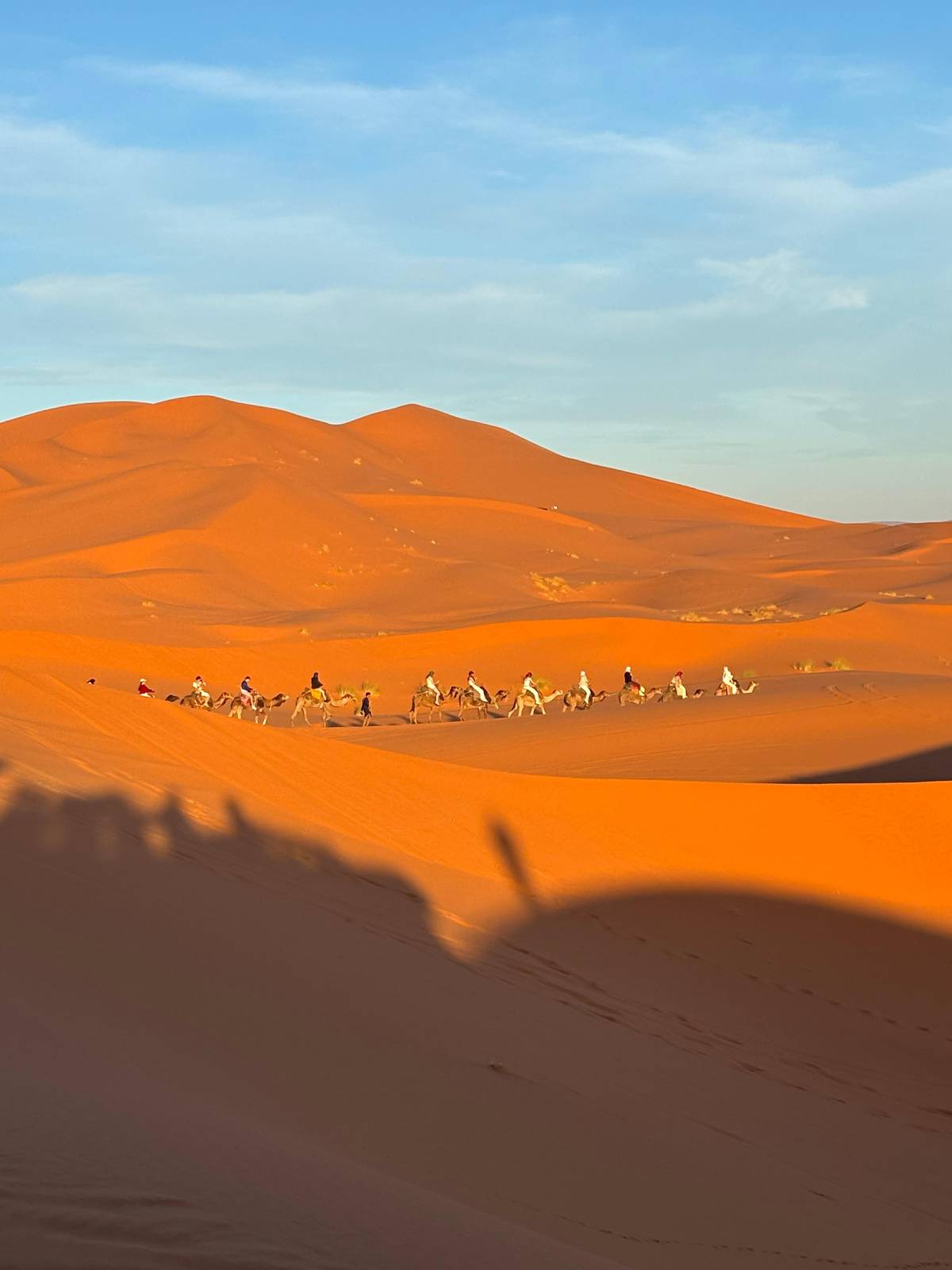
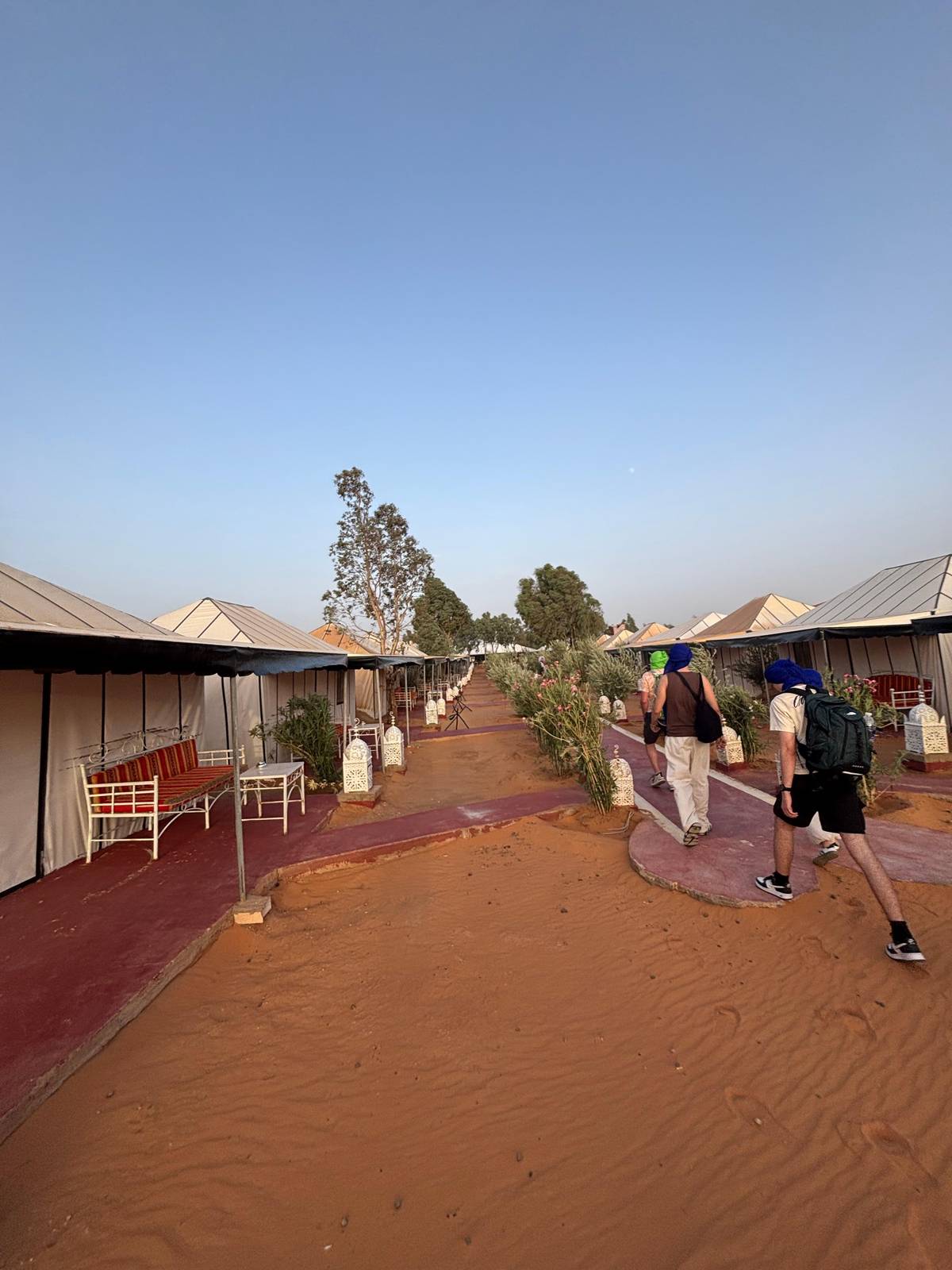
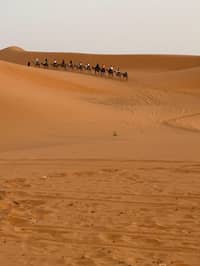
On a desert tour from Marrakech the camel ride is the way into the dunes, not a long expedition. You leave the vehicle and your big luggage at the edge of the sand, climb onto a camel and ride in a line, led on foot by a camel man, to the camp among the dunes of Erg Chebbi. The tour this site recommends includes camel rides or a 4x4 transfer, and names a camel ride at sunset and another at sunrise among its highlights.
The rides are short. The food safari lists a camel trek of 45 minutes, and a one-way tour to Fes lists about 45 to 60 minutes each way. The 2-day Zagora safari gives the same 45 to 60 minutes each way for its own desert.
Short is a good thing. Riding a camel feels strange if you have never done it, and the motion is a slow, rolling sway that you feel in the back and the inner thighs after a while. An hour is long enough to settle into it, watch the light change on the sand and arrive at camp before dark, without the stiffness of a full day in the saddle.
The two rides
Late afternoon
One trek takes guests by jeep to the camel park.
Mounting
The camel rises back legs first, then its front.
Sunset
A sunset ride is a highlight of our pick.
Dawn
Wake early for the sunrise in the dunes.
Morning
Ride back, then breakfast before the drive.
The camels of Merzouga are dromedaries, the Arabian one-humped riding camel, a domestic species that is no longer found in the wild.1 Britannica dates its domestication to about 3000 to 2000 BCE in Arabia.2 Males weigh 400 to 650 kg, and females are about 10 percent smaller.3
They are built for sand. Heavy eyelashes protect their eyes from blowing sand, their nostrils can be squeezed shut, and horny pads on the chest and knees protect them from hot sand when they lie down.45 A camel can take in over 100 litres of water in 5 to 10 minutes, and it can let its body temperature rise to 41 °C before it sweats at all.67
Their working history is long. Dromedaries can carry up to 100 kg for 60 km if they are worked in the cool of the night, and they have carried a rider 185 km in under 11 hours.89 Nomadic camel herding was once an important way of life in Morocco's Saharan zone, but it has almost completely disappeared.10
Minutes on the camel
Ride by ride
| Tour | Ride time | Alternative | Tip from the listing |
|---|---|---|---|
| Merzouga round trip | Sunset & sunrise | 4x4 transfer | Small backpack only |
| Safari with food | 45 minutes | Walk alongside | Long trousers |
| Sahara trip to Fes | 45-60 minutes each way | Walk alongside | Long trousers |
| Desert tour to Fes | Included | Free 4x4 transfer | Quad is extra |
| 2-day trip from Fes | Included | Van on request | Tell them in advance |
As each GetYourGuide listing describes its camel ride.
Three ways to ride
Our pickSunset out, sunrise back
 Overnight trek
If you are already in Merzouga
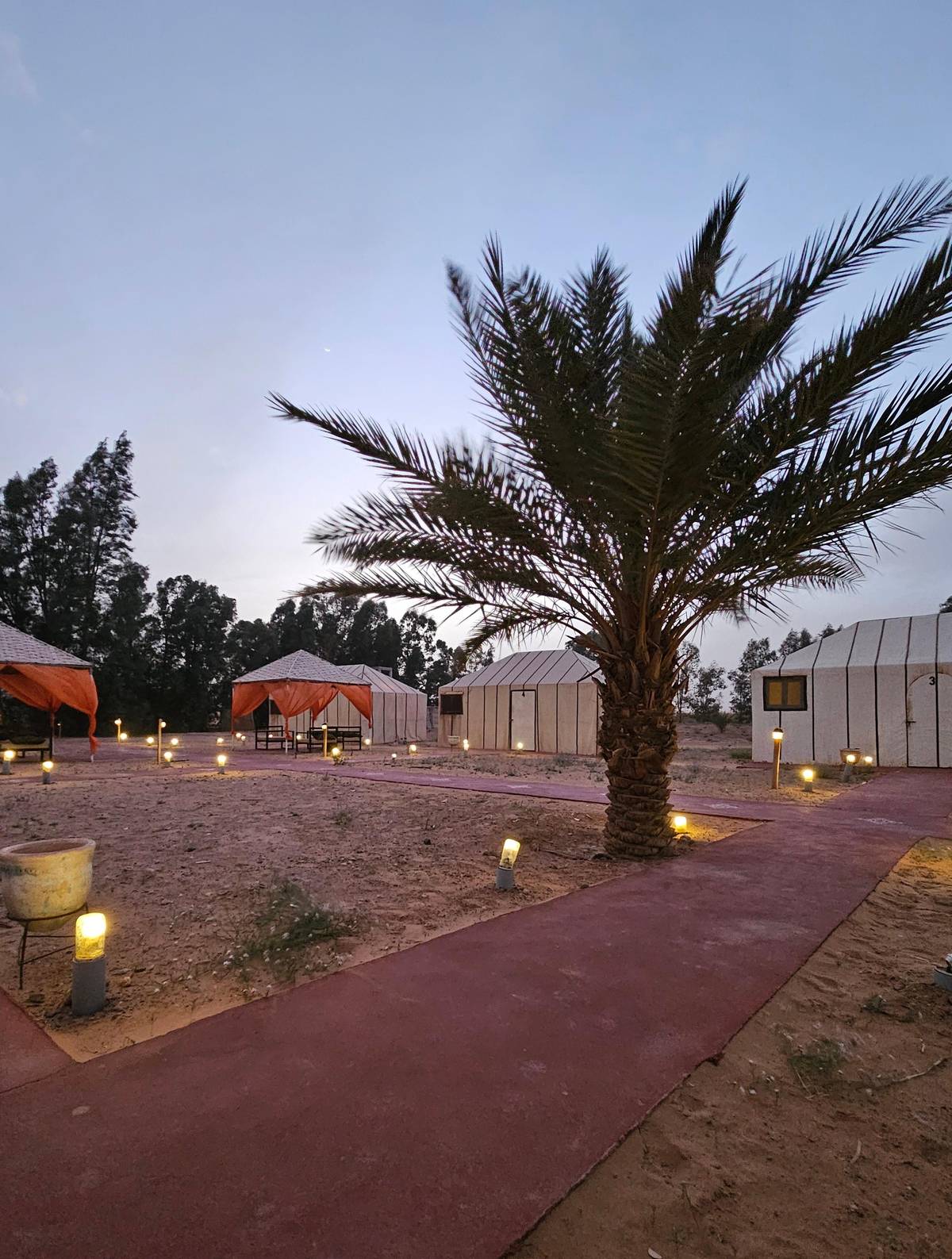 From the village
Decision helper
Choose the way in that suits you
Our recommended tour lists a sunset camel ride as a highlight.
Our pick lists a 4x4 transfer as the alternative to the camel.
Two tours note that walking beside the caravan is possible.
One trek from the village leaves at 16:00, or 18:00 in summer.
dromedary, Arabian (one-humped) riding camel (Camelus dromedarius), a swift domestic species not found in the wild.
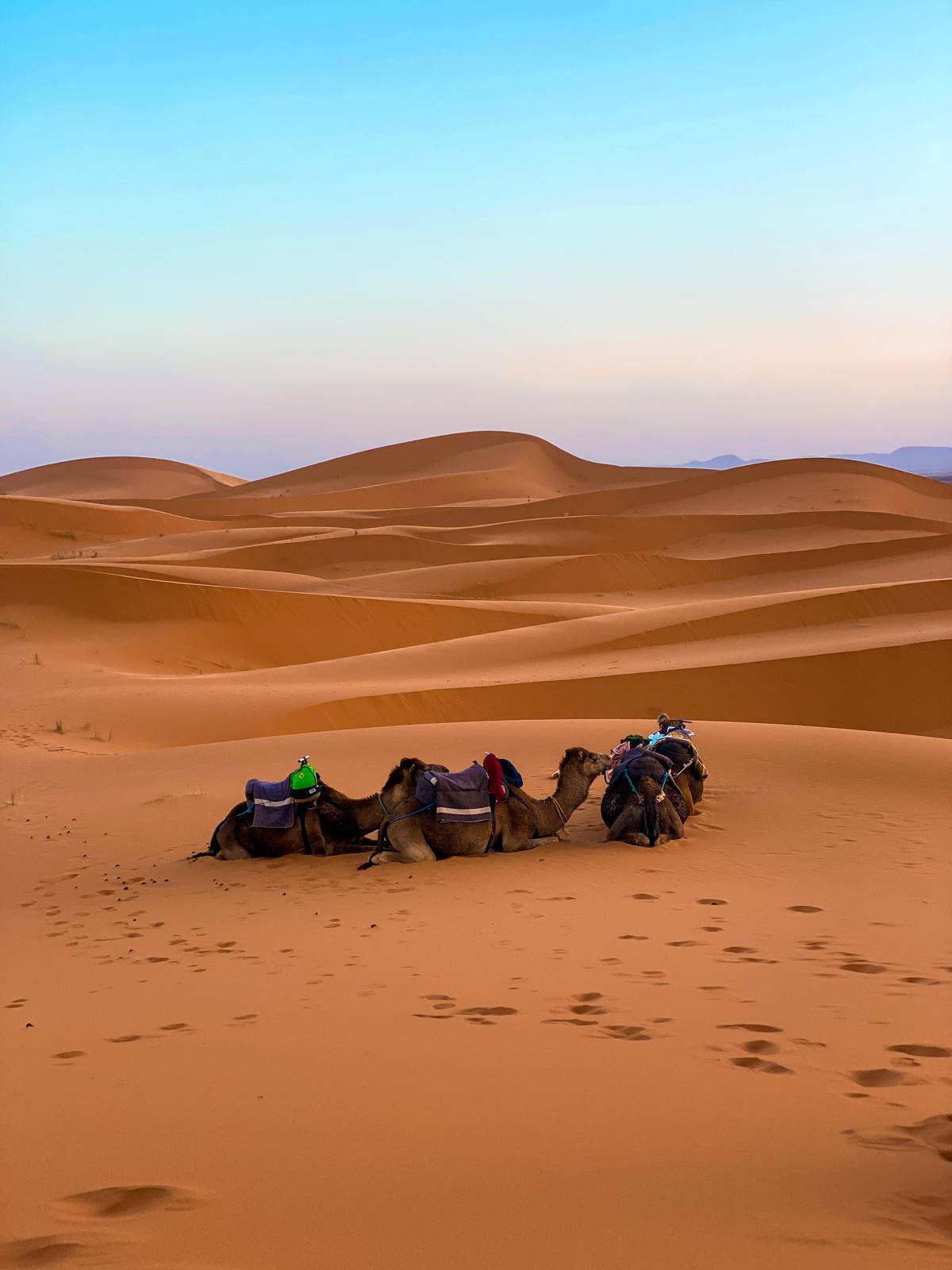
The camels wait lying down, which is how you mount. You swing a leg over the saddle, sit well back and hold the handle in front of you with both hands. When the camel stands, it rises back legs first, tipping you forward, and then lifts its front, tipping you back. Lean back as it starts, then forward, and you will barely notice it. Getting off is the same movement in reverse.
On the move, sit upright and relax your hips into the sway. Keep your hands on the handle when the line goes up or down a dune, and keep your feet in the stirrups if the saddle has them. On these short rides the camels are led on foot by a camel man, and there is no steering to do: your job is to balance and look around.
Wear long trousers, which two tours recommend, and another suggests jeans, trousers or long shorts for the ride. Keep your phone on a strap or in a zipped pocket, and take off loose sunglasses on the descents. A scarf against sun and sand is the classic headwear.
Map
First the whole road with Fes and Zagora, then the two gorges at Boumalne and Tinghir, then the oasis towns and the sand sea of Erg Chebbi.
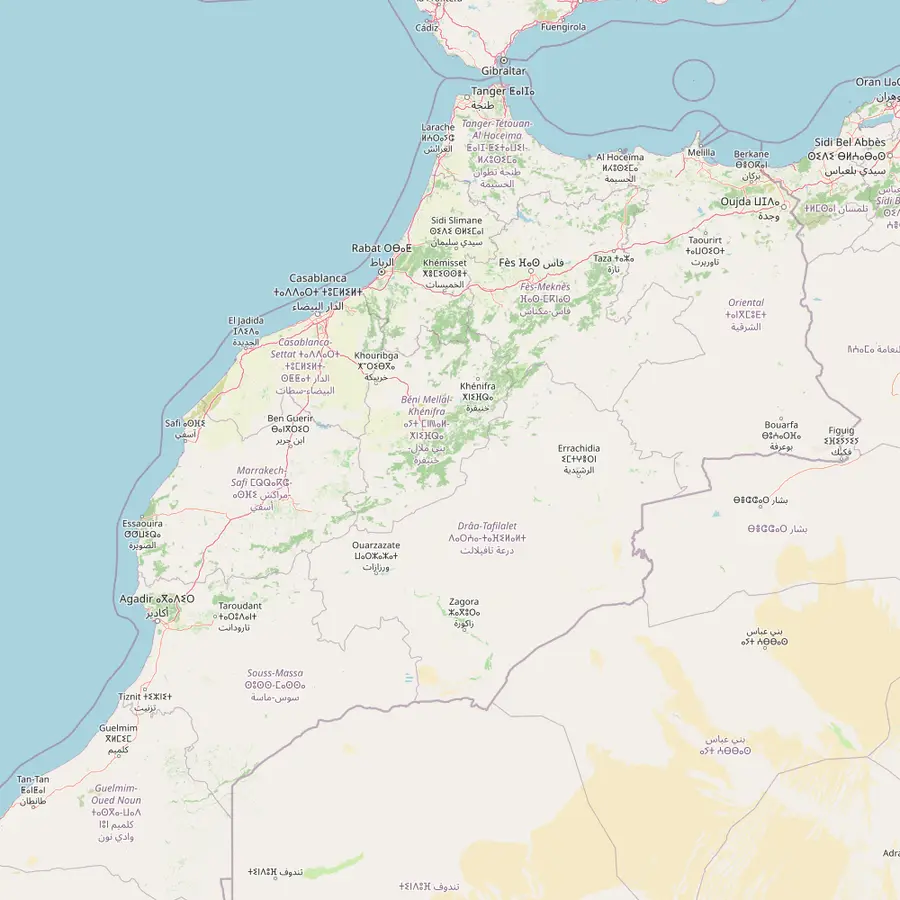 1Marrakech2Tizi n'Tichka3Ait Ben Haddou4Ouarzazate5Boumalne Dades6Tinghir7Errachidia8Merzouga9Zagora10Fes11Midelt
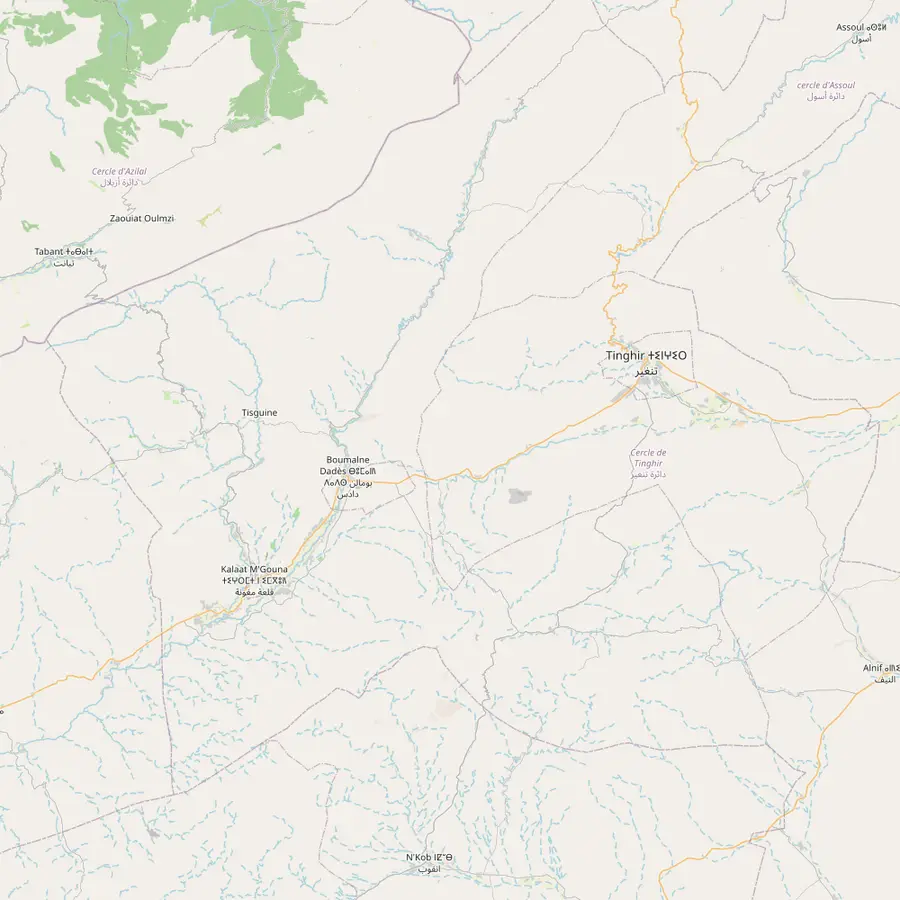 5Boumalne Dades6Tinghir12Kalaat M'Gouna13Dades Gorges14Todra Gorge
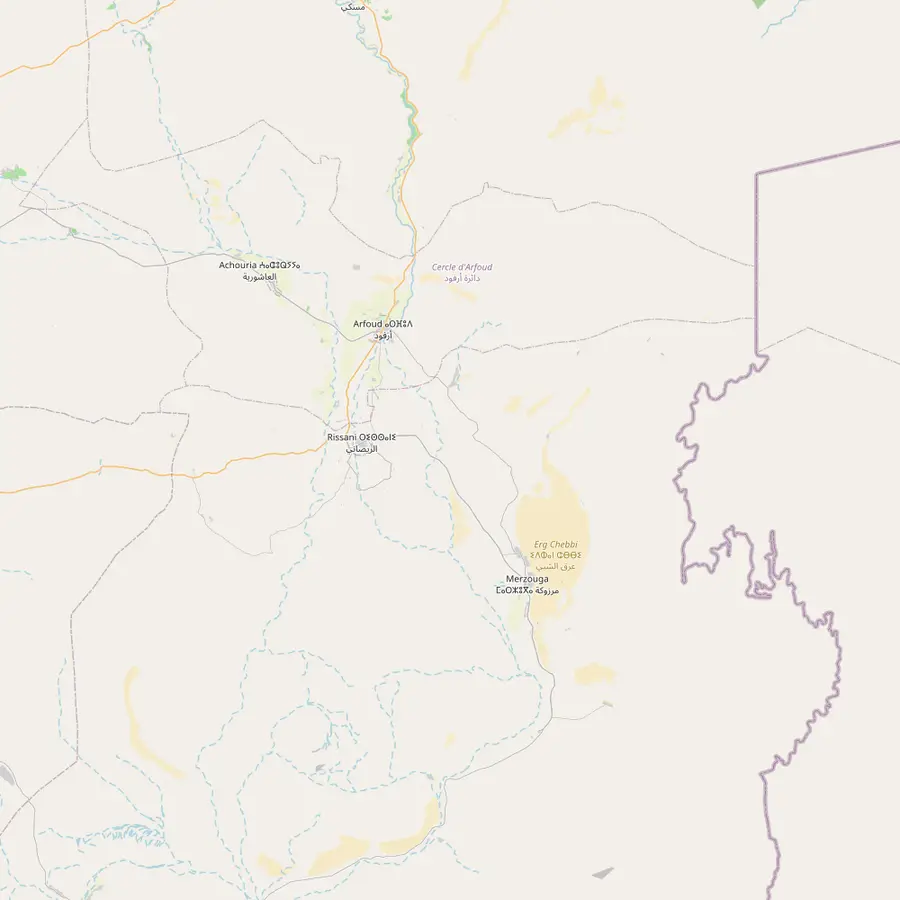 8Merzouga15Erfoud16Rissani17Erg Chebbi
Start and end of the round trip; its medina, founded in 1070-72, has been a World Heritage site since 1985.1112
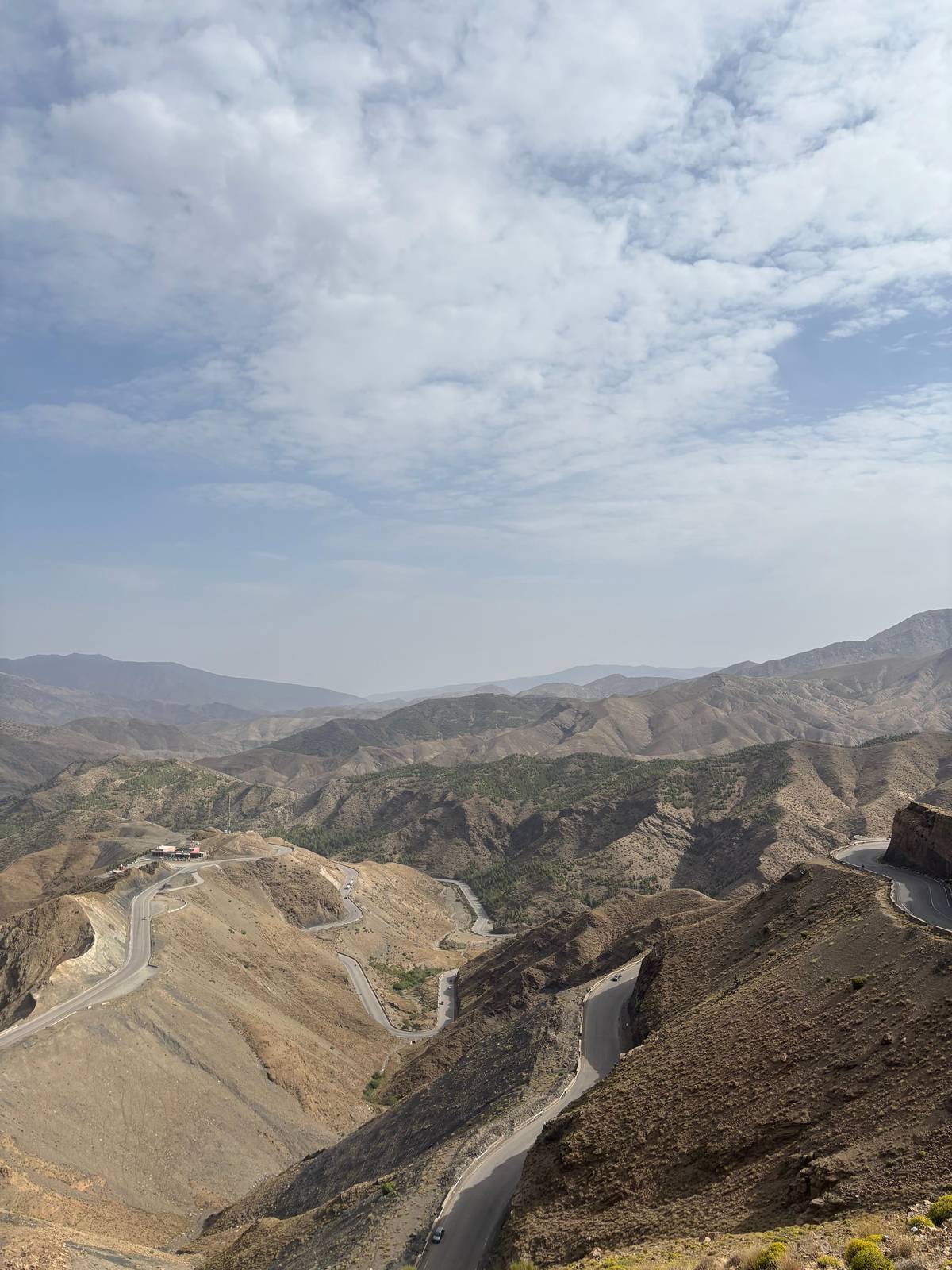
In Google Maps ↗The High Atlas pass on the road to Ouarzazate, 2,267 m high.1314
In Google Maps ↗An earthen ksar on the southern slopes of the High Atlas, a World Heritage site since 1987.1516
In Google Maps ↗An oasis and road junction on the Saharan side of the High Atlas, near where its river joins the Draa.1714
In Google Maps ↗The private-tent tour from Marrakech stops here for its first night; the Dades runs 350 km south to the Draa.18
In Google Maps ↗The private-tent tour lists 40 minutes in Tinghir and 20 minutes at the Todra River.
In Google Maps ↗The WMO climate station behind this site's month-by-month figures, at 1,037 m.19
In Google Maps ↗The village beside the dunes, where a large aquifer feeds palm groves and fields.20
In Google Maps ↗An oasis on the Draa and the goal of the 2-day desert trips from Marrakech.21
In Google Maps ↗Where the one-way desert tours end; its medina has been a World Heritage site since 1981.22
In Google Maps ↗The lunch stop on the last day of two one-way tours to Fes.
In Google Maps ↗A 20-minute break on the private-tent tour; the food-included safari sleeps in this area on night one.
In Google Maps ↗The gorges of the Dades River, a popular tourist destination.23
In Google Maps ↗The Fes to Marrakech luxury-camp tour lists 1 hour at the Todra River.
In Google Maps ↗One of the fortified villages of Tafilalt, the largest Saharan oasis of Morocco.2425
In Google Maps ↗A Tafilalt village; the oasis's old capital Sijilmassa was founded in 757 CE.2526
In Google Maps ↗Star dunes, some over 100 m high, that formed more than 13,000 years ago.2728
In Google Maps ↗Checklist
Cost calculator
Enter your group size to compare four ways to ride into the dunes.
Total from$274
pp from $137
Check availabilityfree cancellationThe sum multiplies each trip's GetYourGuide from-price by the size of your party and converts it at the day's ECB rate; checkout shows the final figure.
Video
The video starts loading once you tap play.
The ride out is timed for the end of the day. One overnight trek from Merzouga leaves at 18:00 in summer and at 16:00 in the other seasons, after a jeep has taken guests to the camel park. On our recommended tour, a camel ride at sunset is listed as a highlight.
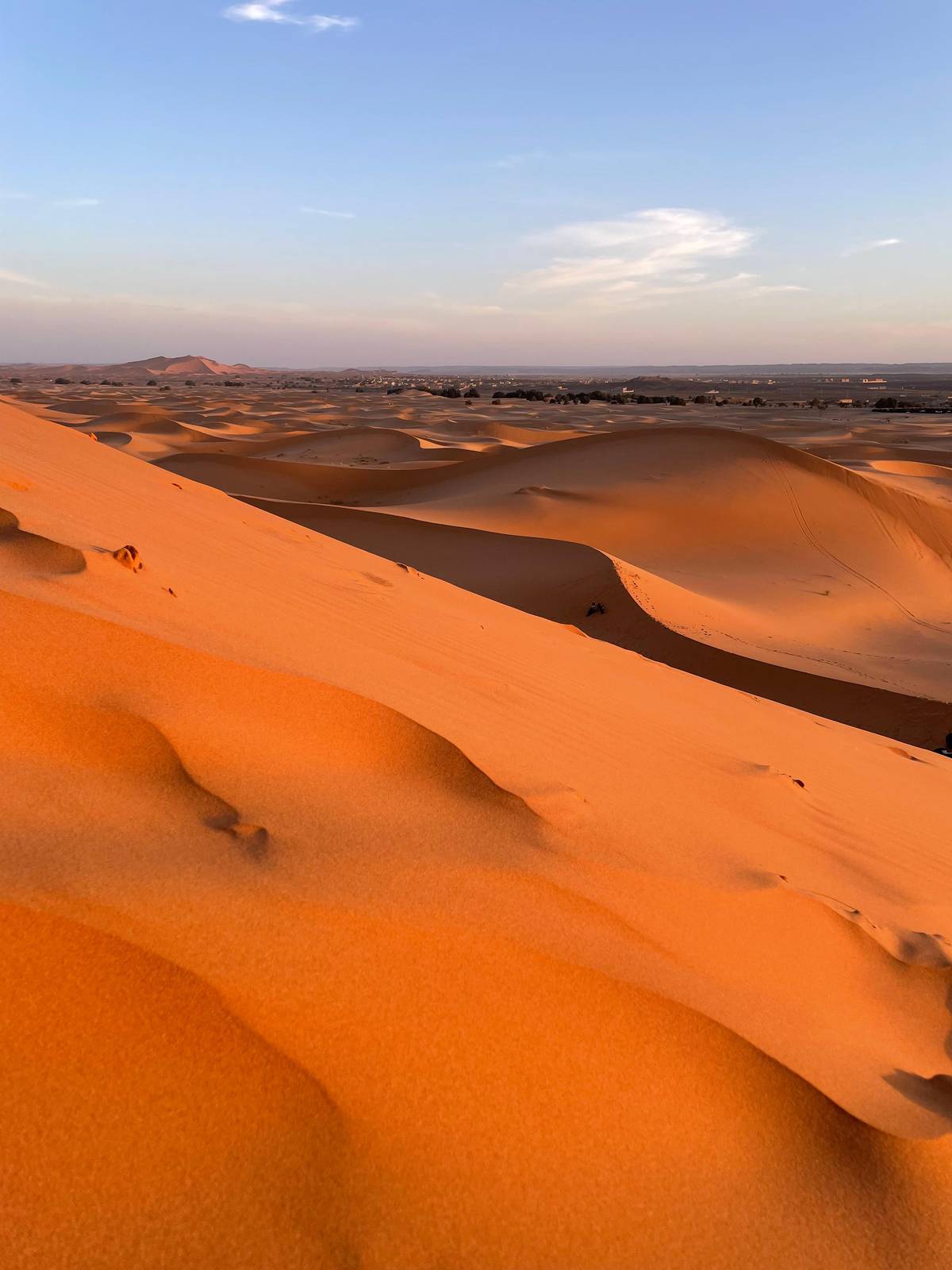
As you ride, the dunes change colour with the falling sun, from pale gold to orange and red, and the shadows of the camels stretch out long across the sand. Many of the large dunes of Erg Chebbi are star dunes, with sharp ridges running in several directions, and some of the tallest rise over 100 m.2927
If the line pauses on a dune crest before the camp, use the minutes to watch the sun go down. Climb a little higher on foot if you want the best view, but keep an eye on your camel man and the group, as the light goes quickly once the sun has set.
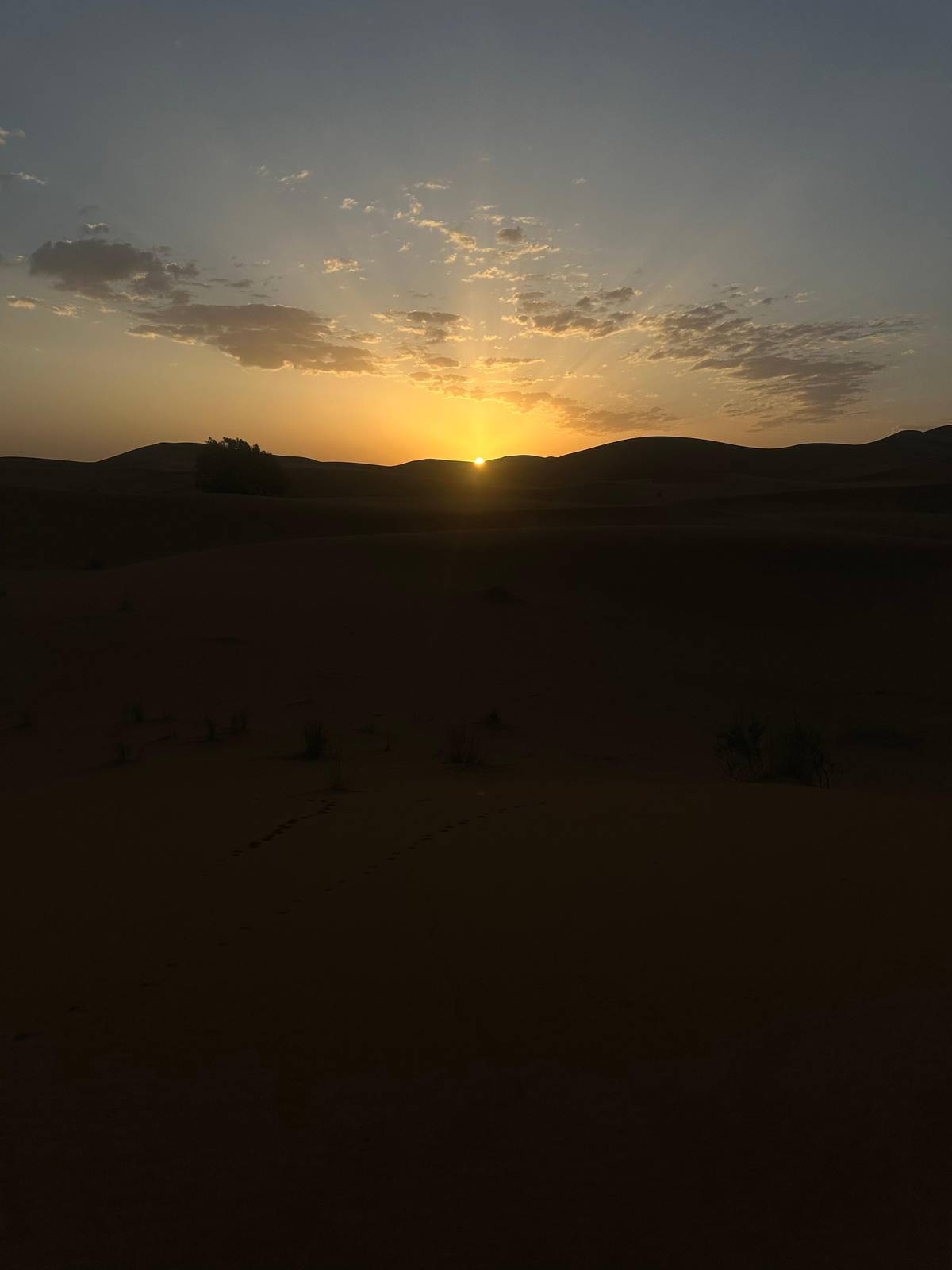
The second ride is in the morning. The listing we recommend describes it simply: wake early to see the sunrise, then ride your camel back to the village. The food safari asks guests to climb a nearby dune for the sunrise first, then ride back to the auberge for breakfast.
The sunrise camel ride is colder than the evening one. From November to February the desert nights fall to 0 °C to 5 °C on our recommended tour's own figures. Ride in the warm layer you slept in and take it off later in the van. In summer the morning is the most pleasant hour of the day.
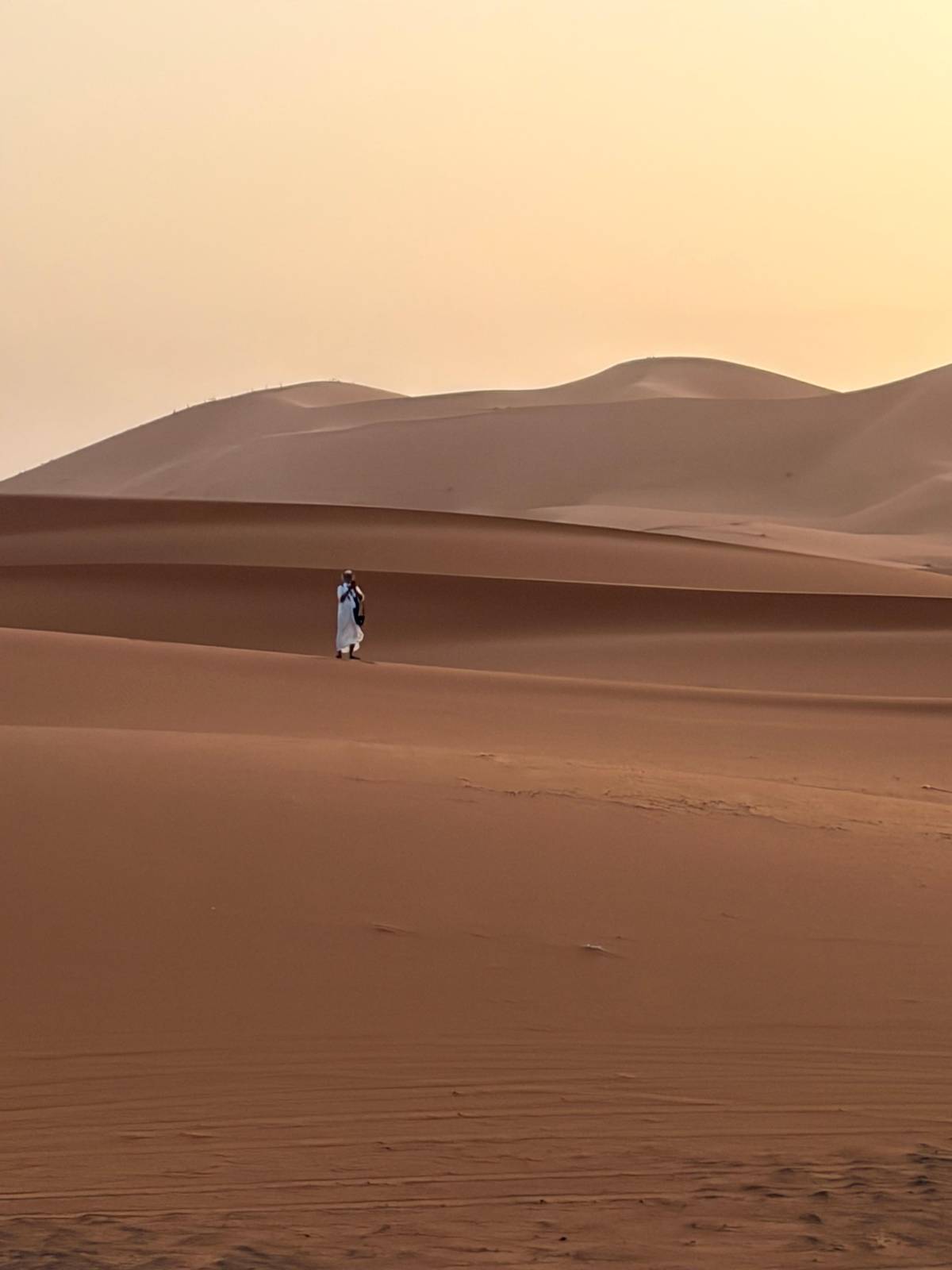
The light at dawn is softer than at sunset and the sand is untouched, with only the tracks of the night's wind and small animals. Keep your camera out on the way back; with the sun low behind you, the shadow of the whole caravan lies on the dune beside you.
A camel ride is not for everyone, and the tours allow for that. The tour we recommend lists camel rides or a 4x4 transfer, and the one-way tour to Fes offers a free 4x4 transfer to camp instead of the camel ride. A trip from Fes lets guests whose health does not allow a camel ride reach the camp by van, if they say so in advance.
You can also walk. Two tours note that walking alongside the caravan is possible, which is a good choice for children who are unsure or anyone who prefers to keep their feet on the sand. Walking in soft sand is slower and more tiring than it looks, so wear closed shoes.
Tell your driver-guide on the first morning if you want the transfer or prefer to walk, and again before the ride. That way the camp can arrange the vehicle while the camels are being saddled.
The camels on these rides work every day, and how you treat them matters. Mount and dismount only when the camel man says so, and never try to make the animal stand up or lie down yourself. Do not pull on the head rope or the reins; the camel follows the one in front of it and the person leading the line.
Keep your bag light. A small backpack on your back is much easier for you and the animal than a heavy bag hung on the saddle, and large luggage stays in the vehicle anyway on the tour we recommend. If you are much heavier or taller than average, say so when you book, so the camp can pick a strong animal or arrange the 4x4 transfer instead.
When you stop, let the camels rest where the camel man leaves them, and ask before you stroke or feed one. If a camel seems injured, lame or badly treated, tell your driver-guide and mention it in your review on GetYourGuide afterwards. Reviews are read by the next travellers and by the operator, and they are the clearest feedback you can give about the animals.
Your desert trip
Pick a date, get collected at your riad, and cancel free up to 24 hours before.
About 45 to 60 minutes. One tour lists 45 minutes; others list 45 to 60 minutes each way.
Yes, at sunrise. Our recommended tour lists a camel ride at sunrise back to the village before breakfast.
Long trousers. Long trousers are recommended; another tour suggests jeans, trousers or long shorts.
Yes, by 4x4 on some tours. Our pick lists camel rides or a 4x4 transfer; one Fes tour offers the 4x4 free.
Yes, one-humped dromedaries. The dromedary is the Arabian one-humped riding camel, a domestic species not found in the wild.1
No, only a small backpack. Large suitcases stay in the vehicle; camels cannot carry large luggage.
In the late afternoon. One Merzouga trek leaves at 18:00 in summer and 16:00 in other seasons.
Sources